

Home / Addiction Treatment in Colorado Springs / Partial Hospitalization Program in Colorado Springs
Partial Hospitalization Program in Colorado Springs
Most people who call us about PHP have already tried something. A therapist once a week, a few months of cutting back on their own, maybe a detox that didn’t hold. At Drift Behavioral Health, our partial hospitalization program in Colorado Springs is the next step up from that, and it is still outpatient. You come in 5 to 6 days a week for about 5 hours, then you go home. The days are built around group therapy, individual sessions, and a psychiatric provider who handles medications, including MAT. Most people are here for 4 to 8 weeks before moving to our intensive outpatient program.
Looking for mental health support? See our Mental Health PHP.

What Are Partial Hospitalization Programs (PHPs)?
A partial hospitalization program (PHP) is the most intensive level of outpatient addiction care. The ASAM Criteria, the standard most insurers use to match a person to a level of care, sets the bar. It defines PHP as 20 or more clinical hours each week, delivered by counselors, therapists, and medical providers together. You attend during the day and go home at night. There are no overnight stays and no waiting for a bed to open.
PHP sits between residential rehab and an intensive outpatient program (IOP). It fits when weekly therapy hasn’t been enough to change the pattern, but you don’t need 24-hour medical monitoring. A 2023 study of 6,633 adults moving through levels of care found the transition itself matters. Those who stepped into their next level within 14 days had a lower risk of relapse than those who waited or dropped out. Our PHP in Colorado Springs is built around that handoff, on the way in from detox and on the way out to IOP.


PHP Schedule and Length of Stay in Colorado Springs
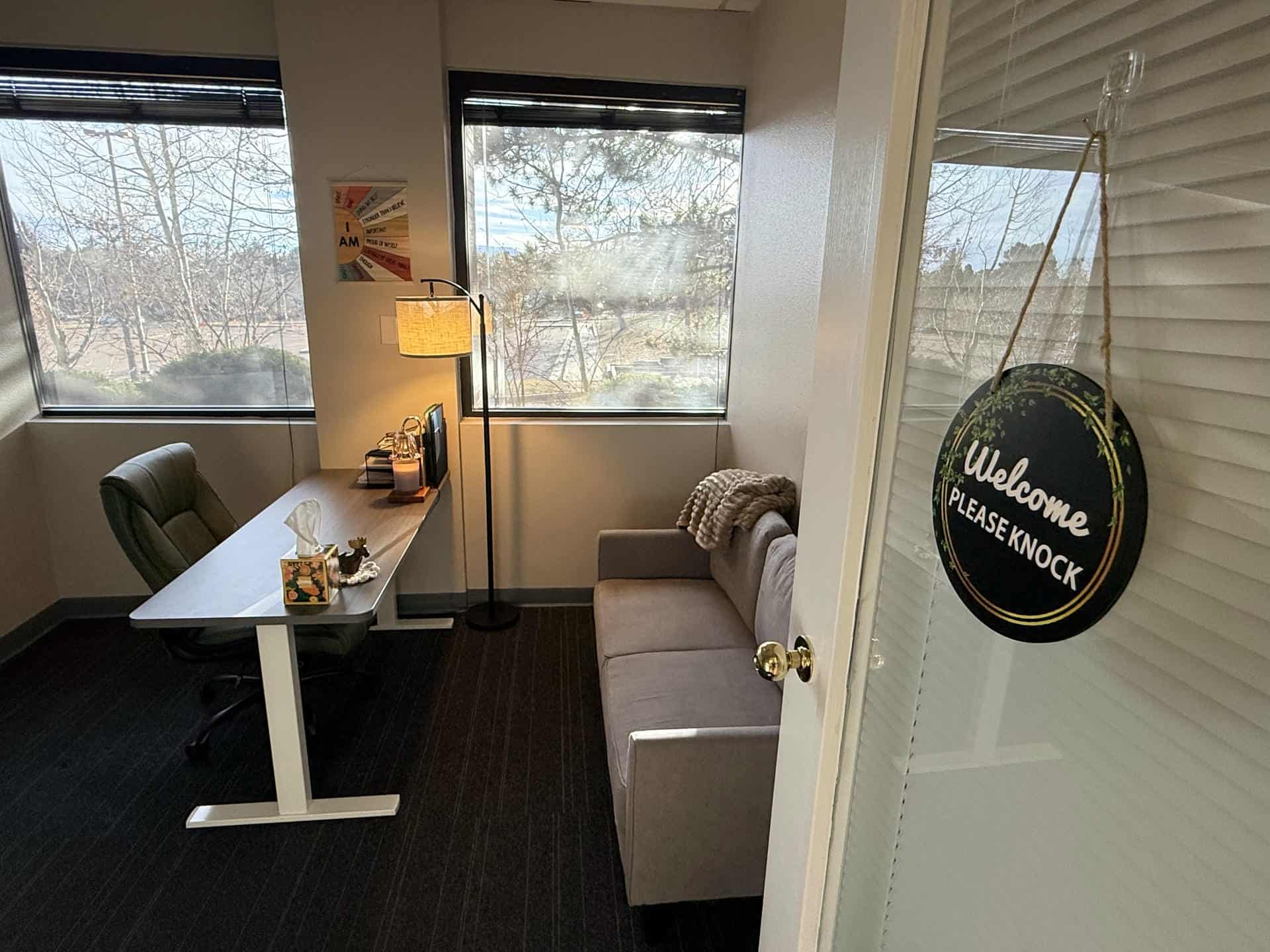
Our partial hospitalization program in Colorado Springs meets 5 to 6 days a week for about 5 hours a day. Over a week, you’ll spend 25 to 30 hours in programming. Day and evening tracks are available. In-person groups meet at our office at 5446 N Academy Blvd. Virtual attendance is an option when your clinical team agrees it fits your situation. Evenings and at least 1 full day stay yours.
Most people complete PHP in 4 to 8 weeks. Length of stay depends on how you’re doing. Each week, your therapist reviews the plan with you. When your cravings, sleep, and mood have steadied, you step down to IOP. A few finish sooner, and some need more time. Neither one means anything went wrong.
A Typical Day in Addiction PHP
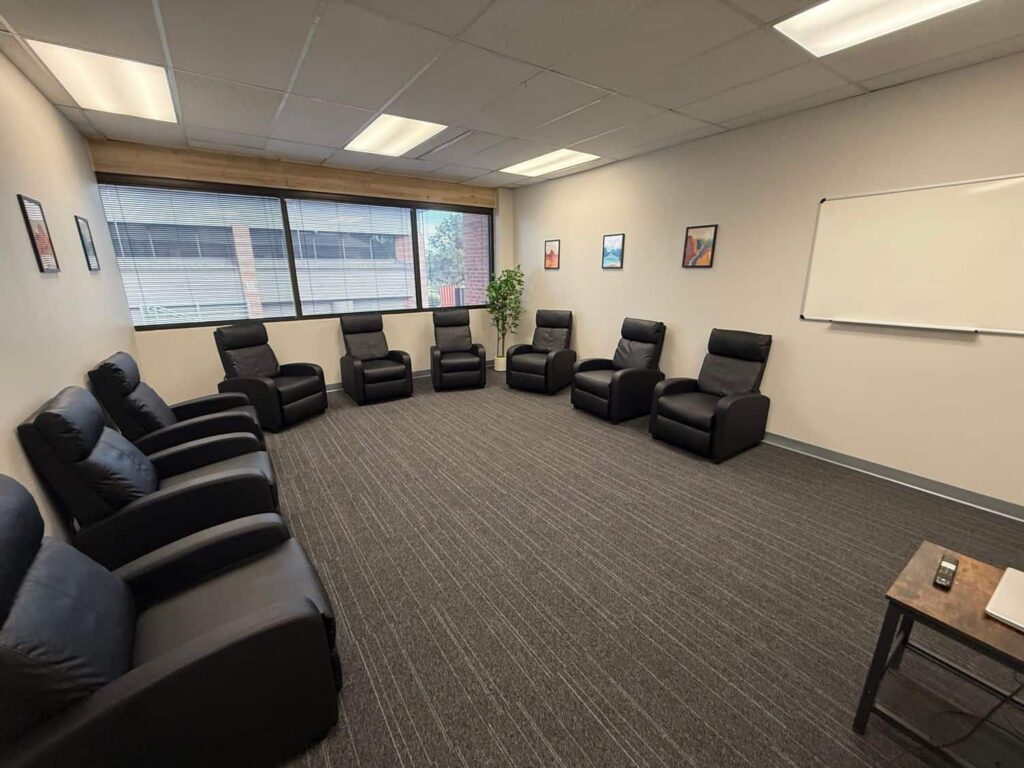
Each morning at Drift opens with a genuine check-in. Your counselor checks on how you slept and if cravings surfaced during your morning commute. The rest of the morning focuses on group therapy, covering rotating daily topics like relapse prevention and CBT skills. In DBT sessions, you practice tolerating urges without acting on them. A skill that takes real work. Small group sizes ensure everyone remains actively engaged.
Your schedule includes designated weekly one-on-one therapy sessions. Meanwhile, a psychiatric provider monitors your medications, including MAT, as required by your care plan. During holistic therapy blocks, options like yoga, mindfulness, art, or music therapy give your physical body an outlet. Each day ends with a concrete plan for the night ahead, such as identifying contacts and locations. Evening hours present the greatest challenge in early recovery. You then head home, ready to return the next day to the same supportive routine.
Our Approach to Addiction Treatment at Drift Behavioral Health
We see substance use as something a person is living with and can change. Our partial hospitalization addiction treatment is trauma-informed, which in plain terms means we assume something hard came before the substance. We build safety into every session for the same reason. We also follow harm-reduction principles, so you don’t have to arrive perfect on day 1. Your plan starts with a full look at your history and at what has already been tried.
Many of the people in our PHP are also living with depression, anxiety, PTSD, or another mental health condition. You’ll be screened for co-occurring conditions at intake. If one is present, you receive dual diagnosis treatment inside the same program from the same clinicians. Your psychiatric provider manages both conditions, so you aren’t juggling 2 prescribers or 2 sets of appointments. Medication changes for your mood and for your cravings get decided in the same visit.
Substances We Treat in Partial Hospitalization Rehab in Colorado Springs
Our PHP treats substance use disorders across every major class. We work with adults dependent on alcohol, on opioids such as heroin, fentanyl, and oxycodone, and on benzodiazepines like Xanax. Stimulants, including cocaine, meth, and Adderall, and sedatives are treated in the same program. So are hallucinogens, marijuana, nicotine, and prescription drugs taken outside how they were prescribed.
Hardly anyone walks in using just one thing. Alcohol on top of Xanax, or fentanyl with meth to stay upright, is the norm. Each combination changes what withdrawal will do to you and which medications we can safely give. So the intake is blunt: what are you using, how much, and when was the last time? People tend to round down on that question out of habit, and the answer still doesn’t shock anyone here. It just determines your medications and which group you start in.
What to Expect in Our PHP for Substance Use Disorders
Substance use PHP at Drift runs as its own track. Your groups are made up of clients working on substance use, and the curriculum is written for it. Nobody sits through a session on a topic unrelated to why they came. You see the same therapist for individual sessions throughout, and the same psychiatric provider for medications. We keep it that way on purpose, since honesty comes easier with someone who already knows your story.
Individual and Group Therapy
Individual sessions are where the long version of your story gets told. Your therapist wants to know what the substance was doing for you, because it was doing something, and what it has cost so far. Then the two of you get specific about risk: which friends, which paydays, which drive home. Group is the practice field.
In the CBT group you learn to catch the thought a few seconds before it turns into a stop at the liquor store. Psychoeducation groups explain what withdrawal and the first months of recovery do to your brain, which makes the sleeplessness and mood swings easier to tolerate. You still feel them. They just stop reading as proof the program isn’t working.
Medical and Psychiatric Oversight
A licensed psychiatric provider and medical staff manage your plan and adjust it as your body does. Medication management is available to anyone in PHP who needs it. It might mean help sleeping through the first 2 weeks. For someone else, it is an antidepressant alongside MAT once a co-occurring condition is diagnosed.
Sometimes it is an adjustment to a dose you have been on for years. Whatever you’re already prescribed, you keep taking it. Staff checks on withdrawal symptoms and side effects during program hours. If something comes up that an outpatient setting can’t handle, we arrange a higher level of care the same day.
Family Involvement and Support
Addiction wears down the ones closest to you, and PHP is where the repair starts. Family therapy happens only when you agree to it, at whatever pace you and your therapist decide. The sessions are practical. How to say the truth without it turning into a fight, and what boundaries each side can hold.
Workshops are separate, optional, and open to a partner or parent, and to adult children. They cover what a spouse or parent should do the night they notice the old signs coming back. Nobody expects trust back in week 1. Changed behavior earns it, and these sessions are where your family gets to say out loud when they see it.
Therapies and Modalities We Use
Evidence-based therapy is the core of the program, and holistic practices give the body a role in recovery too. Your plan draws from both, and the mix shifts as you progress. Early on, most of your hours go to stabilization and skills. Later, more time goes to the relationships, routines, and work situations you’ll return to after PHP.
Evidence-Based Therapies
Cognitive-behavioral therapy (CBT) and dialectical behavior therapy (DBT) run through both individual and group sessions. Motivational interviewing helps when part of you wants to stop, and part of you doesn’t, which describes nearly everyone. Relapse prevention planning is concrete: the people, places, times of day, and emotional states tied to your use, and a written plan for each one. Trauma-informed approaches shape every session.
Holistic and Complementary Therapies
Yoga, mindfulness practice, and art and music therapy are scheduled into the week. Yoga and mindfulness help you notice a craving in the body before it becomes an action. Art and music therapy open a door for anyone who finds talking about feelings hard, which describes a lot of us in early recovery. Time outdoors in the Colorado Springs area is part of the culture here. None of it replaces therapy, and all of it supports it.
Optional 12-Step Integration
If peer support and the 12 Steps have helped you before, or you’d like to try them, we connect you with local meetings. We also offer 12-Step discussion groups. Participation is optional. Many clients build their recovery around meetings, and many never attend one. Both do well here.

Medication-Assisted Treatment (MAT) in Addiction PHP
Medication-assisted treatment is available as part of your plan in PHP. For opioid use disorder, we prescribe and manage buprenorphine, including Suboxone and the monthly Sublocade injection. Naltrexone, including the monthly Vivitrol shot, is used for both opioid and alcohol use disorder. Your psychiatric provider walks you through how each one works and how long you might stay on it.
Medication does one job well. It quiets cravings and withdrawal so therapy can do the rest. Every MAT prescription in PHP is paired with counseling and psychiatric follow-up, and dose changes happen with you in the room. If you’re dosed at a methadone clinic, tell us at intake so we can coordinate your schedule around program hours.
Detox and PHP: How the Handoff Works
Drift does not run a detox unit. If your intake screening shows you need medical withdrawal management first, we arrange detox placement with a partner facility in the Colorado Springs area. Alcohol, benzodiazepines, and heavy opioid use are the most common reasons. Those partners provide 24-hour medical oversight. We handle urgent referrals 7 days a week, and the clinical review happens the same day you call.
While you’re in detox, our case manager stays in contact with the facility, with your permission, and plans your PHP start date around your discharge. Your first PHP day comes within days of leaving detox, with your assessment done and your therapist assigned. The gap between detox and the next level of care is where many relapses happen. We schedule the handoff to close it.

Insurance and Cost of Addiction PHP
We work with PPO, POS, EPO, and HMO plans, and PHP at Drift may be covered under your plan’s behavioral health benefits. We are out-of-network with many insurers. Most PPO plans carry out-of-network benefits, and our admissions team can explain how yours work and how much you’d owe. Private pay is also an option. We do not accept Medicaid or Medicare.
Verification starts with our insurance verification form or a phone call. You give us your plan details, and we contact your insurer directly to confirm PHP benefits, authorization requirements, and your estimated out-of-pocket cost. The numbers reach you before you enroll, in plain language. If your plan won’t cover PHP, we tell you so and talk through other options.

Is Drift’s PHP Right for You?
Who Our Addiction PHP Serves
Partial hospitalization rehab in Colorado Springs fits adults whose substance use has outgrown weekly therapy but who don’t need a hospital bed. Many are stepping down from detox or residential rehab and need daily contact to hold their progress. Others have a supportive home environment and don’t need round-the-clock care. Everyone in PHP can go home at night safely, with a living situation stable enough to make it work. If your situation isn’t there yet, we say so honestly and help you find residential placement first.
How Admission Works
Admission takes 4 steps. The first 2 happen in a single call. Nothing is scheduled until you know what it costs. Here is how it goes.
- Call (719) 800-9371 or send the contact form. An admissions coordinator asks about your substance use, your medical history, and any medications, including MAT.
- We verify your insurance and explain your estimated cost before anything is booked.
- You complete a clinical assessment with a licensed clinician, in person or by video. Same-day assessments are available. If detox is needed first, placement is arranged from this call.
- You start PHP, often within days. Your therapist meets you on day 1 and hands you your group schedule.
Most of the paperwork happens on our side. You answer questions and sign consent forms. If you’re calling for someone else, we can talk with you first and then with them, or all together. Either way, the call is the hard part, and it’s short.
Aftercare and Step-Down Planning
Aftercare planning starts in your first week. You and your therapist map what comes after PHP while you’re still in it. The plan covers your step down to our intensive outpatient program and ongoing psychiatric visits. It also settles whether sober living, outpatient therapy, or community recovery meetings belong in it. Most people move from PHP straight into IOP with the same clinical team, so nothing resets. Your therapist and your prescriber both carry over.
Timing matters as much as content. In the 2023 study cited above, clients who started their next level of care within 14 days relapsed less than those who waited. Your step-down is scheduled before you finish PHP. Peer support after discharge is coordinated through community groups and your ongoing IOP schedule.

Begin Your Partial Hospitalization Program in Colorado Springs
Steady progress starts with one conversation. Call (719) 800-9371 to talk through whether our partial hospitalization program in Colorado Springs is the right fit for you or someone you love. We verify your insurance and answer your questions about PHP in Colorado Springs. If you’re ready, we schedule a same-day assessment. If you aren’t sure yet, calling to ask questions is a fine place to start.
FAQs
Is PHP available through telehealth?
Yes. Eligible adults anywhere in Colorado can attend the full PHP schedule via secure video, including group therapy, individual sessions, and psychiatric visits for MAT. Your clinical team decides whether virtual attendance is safe for your situation, and some clients alternate between in-person and virtual days.
Do I have to stop using completely before starting PHP?
No. We follow harm-reduction principles, so you can start while still using, and we work with you toward abstinence at a safe pace. If your use requires medical withdrawal management, we arrange detox placement first and hold your PHP spot.
Can I continue MAT if I've already started it elsewhere?
Yes. Bring your current prescription and your prescriber’s contact information to your assessment, and we request your records with your written permission. Your psychiatric provider reviews the prescription at your first visit so nothing lapses between providers.
How is addiction PHP different from Drift's mental health PHP?
The two run as separate tracks with separate groups and curricula. Addiction PHP centers on substance use, cravings, withdrawal, MAT, and relapse prevention, while the mental health PHP centers on conditions like depression, anxiety, and PTSD. If you have both, you’re placed in the track matching your primary need and receive dual diagnosis care within it.
What happens if I use again during PHP?
You tell your therapist, and we adjust your plan. A return to use is treated as clinical information, not a reason for discharge, unless safety requires a higher level of care. We look at what led up to it, revisit your relapse prevention plan, and may add medical or MAT support.
Will my employer find out I'm in a partial hospitalization program?
Not from us. Your records are protected under HIPAA and federal confidentiality rules for substance use records, so we release information only with your written consent. If you need paperwork for FMLA or a medical leave, ask our admissions team about it when you call.
What is the difference between PHP and IOP for addiction?
Hours. PHP runs 25 to 30 clinical hours a week, and IOP runs about 9 to 15 hours over 3 to 5 days, with evening groups available. IOP lasts 2 to 6 months, and most clients move into it directly after PHP.
Latest Resources

Does my teen have to admit they have a problem to get treatment? No. And that’s worth knowing, because waiting for that admission can mean waiting a long time. Denial

Research suggests telehealth IOP can produce outcomes comparable to in-person care for many people. Research comparing office-based and telehealth psychiatric IOP found comparable clinical outcomes and patient participation across both

Figuring out whether you can start Suboxone or Vivitrol without stopping first is the question that stalls people the longest, especially if you’re still using and assume no one will

Verify Your Insurance
Drift Website - Form - Verify Insurance
"*" indicates required fields